

Course overview
-
Starts:Jan 2027
-
Duration: 1 year
-
Mode:Full-time
-
Fees:UK: £9,750 International: £18,500
*Fees apply to 2026-27 entry only.
Engineer your future
This course is designed to equip aspiring engineering leaders with the proficiencies required to navigate and manage complex engineering projects and teams in a rapidly evolving technological landscape. This interdisciplinary course blends technical expertise with management principles, preparing graduates to address the challenges faced by modern engineering.
Why study this degree?

Get accredited
This course is professionally accredited by CMI
Deepen your understanding of core engineering management concepts
Discover different theory methods and techniques, and explore ways to utilise industry standard advanced tools
Enhance your leadership skills
Hone your abilities in leading challenging engineering projects, people and systems
Delve into complex technical briefs and real-world case studies
Master applying advanced engineering management methodologies to complex technical environments
Learn through industry professionals
Access strong industry networks across the engineering and technology sectors
Gain the skills you need to succeed in industry
Graduate well-prepared for a leadership role within an engineering firm, consultancy or tech-driven organisation
More reasons to choose this course
This engineering management course combines technical expertise with management principles, preparing graduates for challenges in fields like mechanical, civil, electronic, environmental, industrial, and systems engineering. Students will engage with a diverse curriculum covering project management, systems design, innovation, leadership, and sustainability practices. Practical applications are emphasised through real-world projects and case studies reflecting industry trends.
Our MSc in Engineering Management course fosters a collaborative learning environment, drawing on faculty and industry expertise; encouraging critical thinking, problem-solving, and leadership skills. It blends engineering and management principles, offering hands-on learning, project-based assessments, and industry collaboration.
Classes are Monday to Friday, between 9:00am and 9:00pm, with some evening sessions included.
Professionally accredited course
Students enrolled on our Engineering Management course will now graduate not only with a Ravensbourne master’s degree, but also with a CMI Level 7 qualification - a powerful combination that enhances employability, leadership capability, and professional credibility.
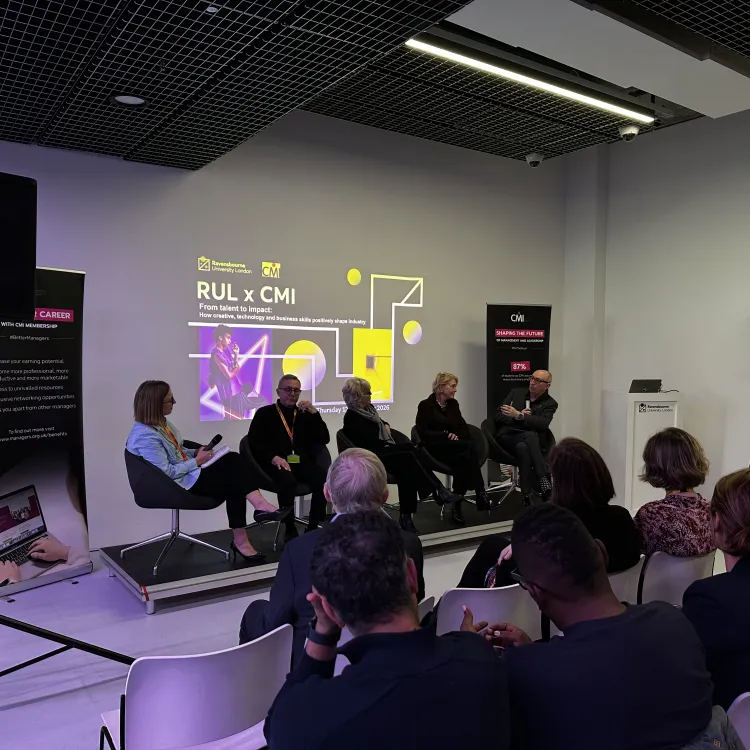
Find out how we're working with industry leaders on CMI graduate accreditation
Entry requirements
Home
A lower second-class honours (a 2:2, or equivalent non-UK qualifications) or higher in a relevant subject, or an equivalent professional qualification in a related subject. You will also need to submit a copy of your Curriculum Vitae (CV)/Resume.
If you are applying directly from an undergraduate degree course without experience or professional practice, you must be able to demonstrate a good knowledge of your chosen subject area.
International
If you have international qualifications, please view our entry requirements per country. Along with your academic qualifications, you will also need to submit a copy of your Curriculum Vitae (CV)/Resume.
In order to be eligible for this course, you will need to be a competent speaker and writer of English. If you require a Student Visa you need to provide us with an IELTS or equivalent English language qualification, which demonstrates a minimum of 6.0 (with a minimum of 5.5 in each sub test) or CEFR Level B2 in each component. Please contact [email protected] for more information.
Selection criteria
We welcome suitably-qualified applicants who are able to demonstrate a good level of skills in areas associated with this subject. To get a holistic view of your ability and aptitude to succeed on the course, we will also consider your enthusiasm and interest in the subject area, how you manage the creative process, previous study and your professional skill-set.
Applications are welcome from a wide range of backgrounds and experience including from students who may not necessarily possess formal academic qualifications. It is important that applicants can demonstrate an aptitude for learning and continued professional development through a research-led approach.


Location and facilities
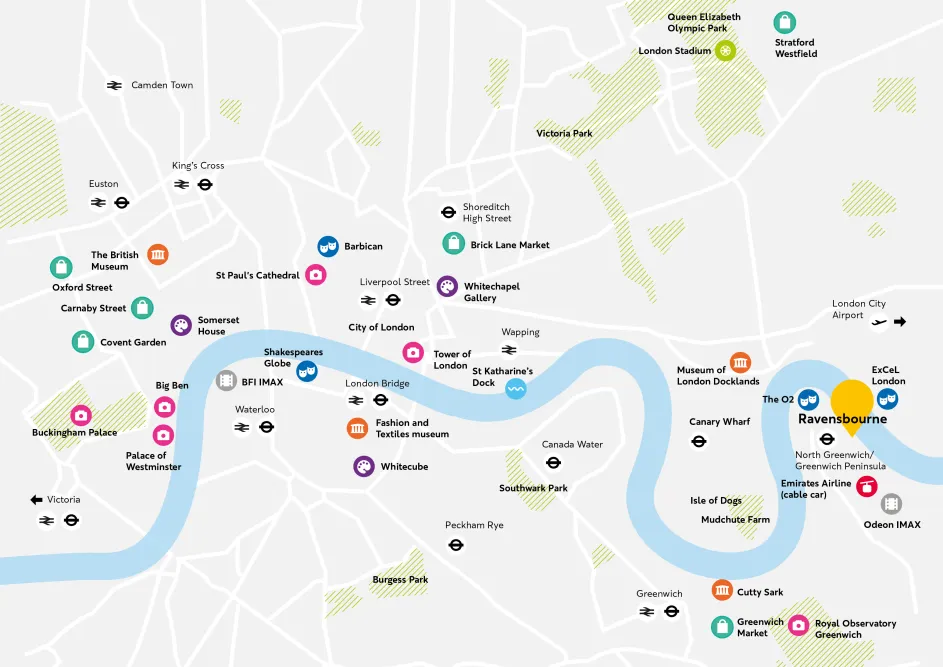
Our prime location beside the iconic O2 gives students direct access to one of London's most exciting centres for innovation, business, and opportunity.
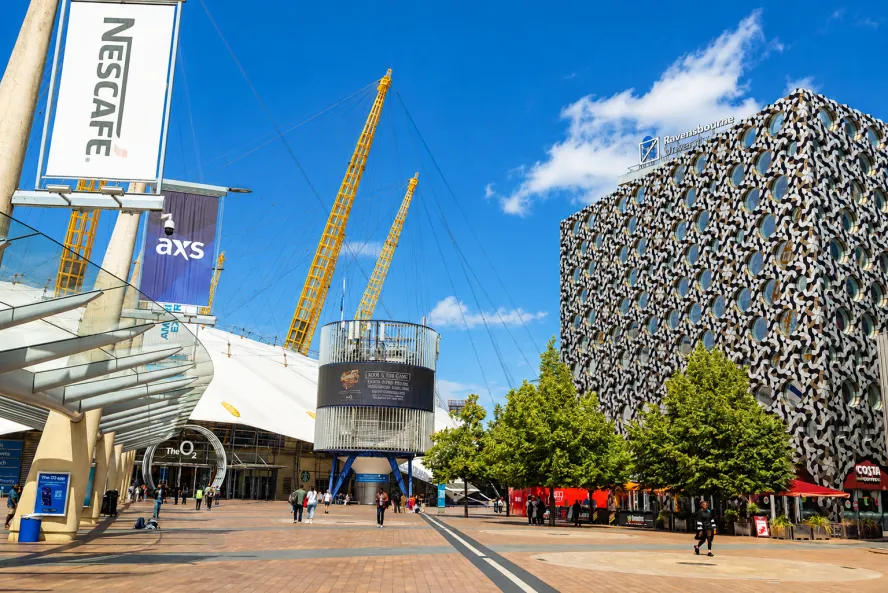
Ravensbourne R1 building and campus
Discover our campus which brings together a range of courses at the intersection of business, technology, and creativity.
Located in the heart of the Design District and next to London's iconic O2 Arena, you'll study in a vibrant hub of innovation. Find out more about our campus and its cutting-edge facilities here.
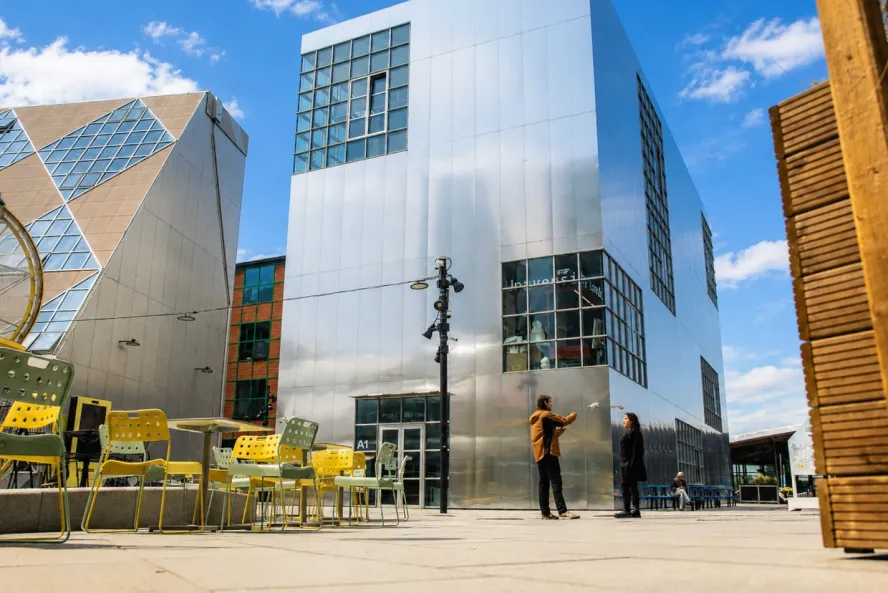
R2 Building (Centre of Excellence in Emerging Technology)
The futuristic Centre of Excellence in Emerging Technology is one of many industry-standard facilities available to all Ravensbourne students and is located in our R2 building within the Design District.

Study Spaces
Ravensbourne's campus features plenty of inter-disciplinary, open-plan work spaces, ideal for collaboration with your course mates.

Library
Our library offers a wide range of print, digital and multimedia resources to support learning, teaching and research - find out more

Print Shop
Whether you're printing coursework, portfolios or creative projects, our on-campus Print Shop offers professional printing services to help bring your ideas to life