How Vice Chancellor’s Award Winner Roisin Kerr is Redefining Live Event Broadcasting
Publication date:
When BA Digital Television Production graduate Roisin Kerr first walked through the doors of Ravensbourne University London, the thought of presenting in front of an audience was daunting.
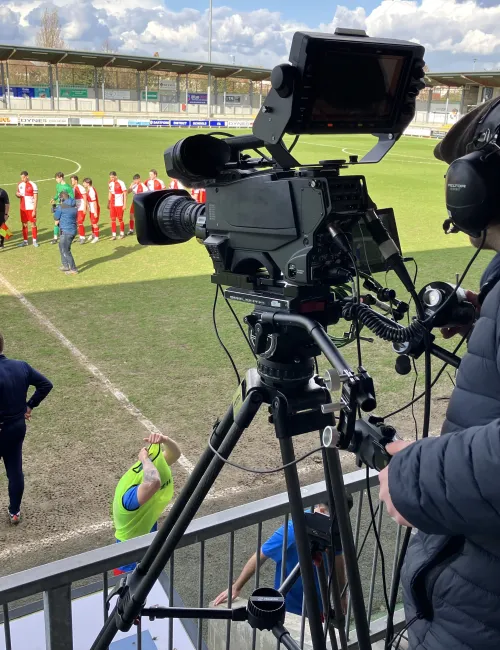
Fast forward to 2026, and Roisin is capturing massive live stadium crowds at prestigious London venues - and recently took home the prestigious Vice Chancellor’s Award for Achievement in Industry.
Roisin’s journey at Ravensbourne is a story of personal transformation and technical excellence. Early in her degree, public speaking was one of her biggest hurdles.
Looking back from pitching to Channel 4 in first year to operating cameras at Wembley for Coldplay, how did the support at Ravensbourne help build your confidence?
Roisin: Ravensbourne gave me the confidence to realise I was capable of working in environments that initially felt intimidating. Going from pitching to Channel 4 in my first year to operating cameras at Wembley for Coldplay was a huge progression, but it came from lots of smaller opportunities where lecturers encouraged me to put myself forward, ask questions, make mistakes and learn from them.
As a neurodivergent student, I’ve learned that being organised and planning ahead helps me work at my best. Ravensbourne gave me the space to develop those strategies while also encouraging me to ask for feedback.
The biggest thing I took away was that I didn’t have to work in exactly the same way as everyone else to be successful. I just needed to understand what works for me, trust my abilities and use the strategies that support me. That’s what helped me build the confidence to take on bigger professional opportunities.
Roisin Kerr photos
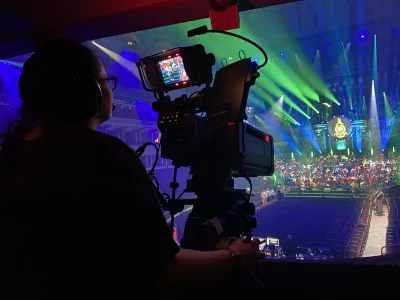
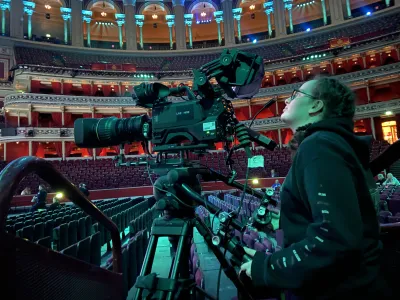
As a female camera operator in live broadcast - a traditionally male-dominated field - what advice would you give other women and neurodivergent students hoping to break into the live music and sport fields?
Roisin: My biggest piece of advice would be: don’t be afraid to put yourself forward. In a male-dominated industry, it can sometimes feel like you have to prove that you belong, but you have just as much right to be there as anyone else. Volunteer, get involved and take on things even if they are outside your comfort zone. You learn a lot by actually doing the job and working with people.
I also think being friendly, reliable, and willing to learn goes a long way. You don’t have to know everything when you start. If you’re unsure about something, ask. I’ve found that people are generally happy to help, and it’s much better to ask a question than pretend you understand something when you don’t.
For neurodivergent students, I’d say find what works for you rather than trying to work like everyone else. For me, being organised and planning ahead makes a big difference. I like to arrive early, know where I’m going and make sure I understand what’s expected of me. That takes some of the pressure off and means I can concentrate on the job itself.
I also wouldn’t see being different as a disadvantage. Live broadcast needs people who think differently and bring different perspectives. You might find your way around the industry is slightly different from someone else’s, and that’s okay. If you want to work in live music or sport, say yes to opportunities, ask questions and keep learning.
To add a bit about what I have been up to since finishing university, I have also just finished a week of camera operating for Hollywood Vampires and during July I worked at Wimbledon as a replay camera operator on No. 1 Court which was very nerve-wracking. It has been a busy couple months for me with odd freelance jobs which was amazing to do after just finishing university.
You can find out more about studying Digital Television Production here.