Work, well-being, and Endometriosis at Ravensbourne

Shining a light on unseen health conditions in the creative sector
Working a full-time job while managing a health condition comes with challenges that often go unseen. Beyond the physical impact, there is the constant effort of getting through the day without the condition becoming a concern for your coworkers. When the condition isn’t well understood or is invisible, the challenge is even bigger as it is harder to explain just how serious it can be.
Endometriosis is one such condition. Despite affecting millions of people worldwide, it is still widely misunderstood, leaving many to manage not only its physical symptoms but also the burden of explaining an illness that is often not visible to others.
The NHS defines endometriosis as a condition where tissue similar to the lining of the uterus (the endometrium) grows outside of the uterus, typically on the ovaries, fallopian tubes, and pelvic lining. This misplaced tissue behaves like normal uterine lining which thickens and bleeds with each menstrual cycle but has no way to exit the body, causing inflammation, pain, and scarring.
In recent years, and thanks in large part to social media and awareness campaigns, understanding of endometriosis has slowly grown. Many women have openly shared their experiences, how they manage the condition, and provided advice for others going through similar experiences.
July marks Uterine Fibroids Awareness Month and to further spotlight stories about the condition, we caught up with Tina Paraskevopoulou, Web Manager at Ravensbourne University London. She shares her insights on living with endometriosis and balancing it alongside work and everyday life.
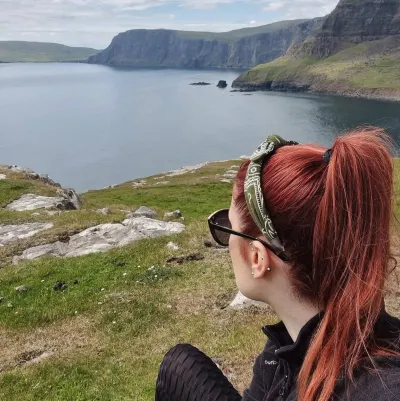
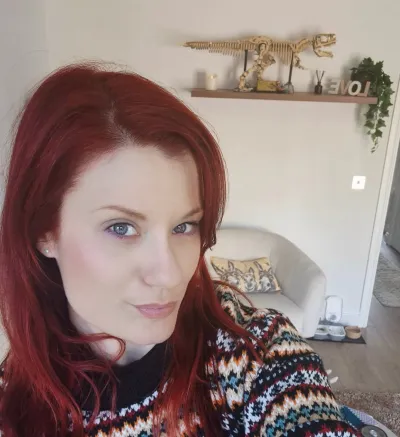
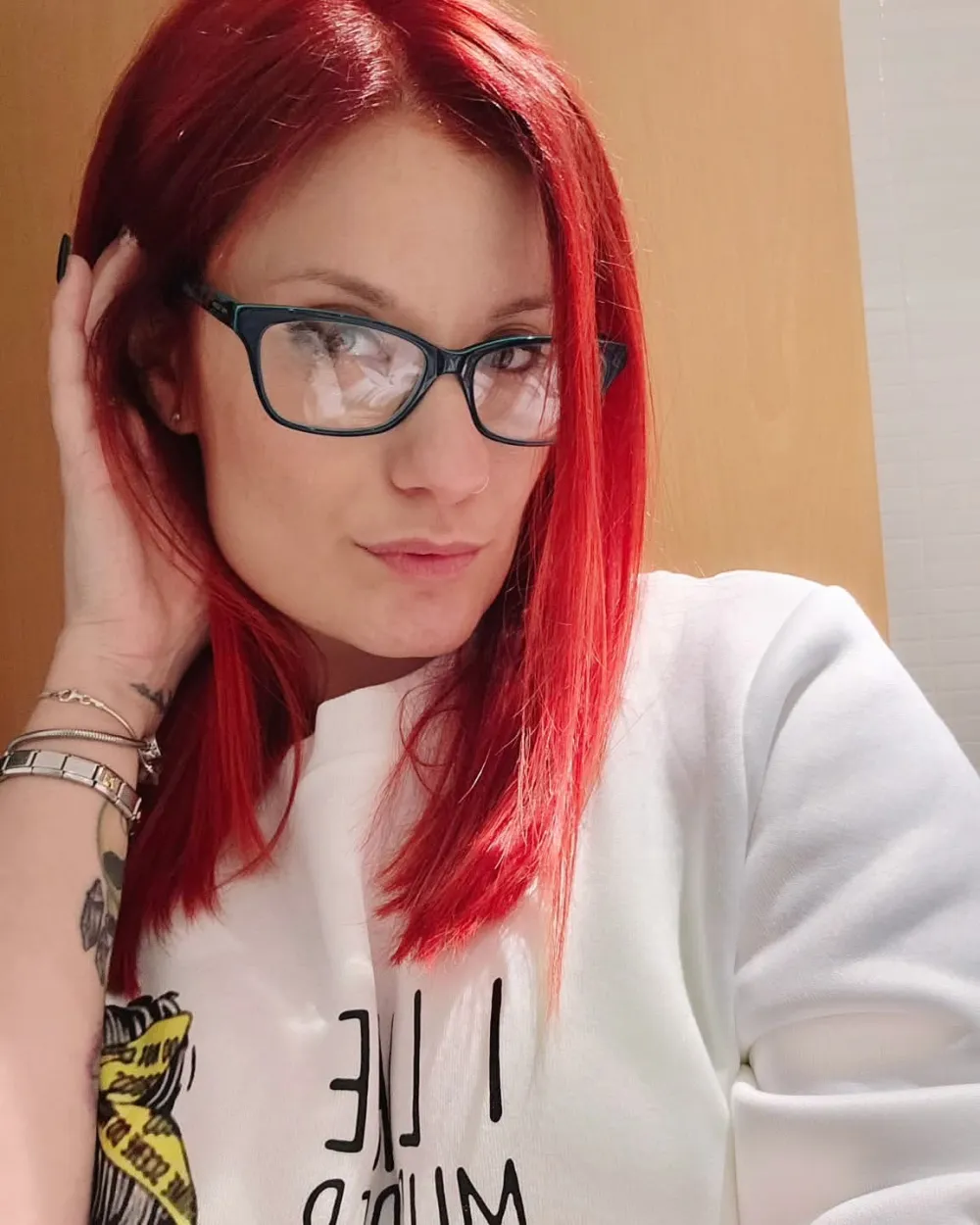
Tina photos
Introduce yourself, with a bit of your background before joining Ravensbourne
Hi! I’m Tina. I have a BA in Journalism and Mass Communications (Aristotle University of Thessaloniki), an MSc in Media Management (University of Glasgow) and a Level 6 Diploma in Professional Marketing from CIM. I came to Scotland in 2012. I worked as a journalist in Greece, was an e-mentor for the University of Glasgow and have been a marketer in the UK for 13 years now with emphasis on marketing automation, digital marketing and marketing systems. I worked in different sectors, from art charities to financial services and now, in Higher Education.
You mentioned having endometriosis from the age of eleven. How do you remember conversations about it being at that time, and at such a young age too?
There was no such thing as endometriosis in anyone’s vocabulary back then. The only thing everyone told me was that ‘I am a woman, and that is normal’. So much pain was never normal, nor was taking strong painkillers monthly from an early age. I was playing volleyball until I was 18 and I remember taking the strongest painkillers I could find to get through a game, a training session or just a simple day.
I have also missed out on school days because I was in pain. A lot of my classmates were experiencing the same, but there was never an answer for us. I was diagnosed in 2016 and that was only because I had a cyst which was visible in an ultrasound and big enough to get operated on. I was lucky enough that my endometrioma was removed and I had no other lesions (fun fact, endometriosis grades do not necessarily correspond to symptoms you are experiencing, many women have no symptoms at all other than infertility and some pains here and there).
I only got diagnosed because I pushed for it and because I kept asking questions (not to mention endometriosis is a Greek word - and I am Greek!) I could hear all the medical professionals talking about it.
How do you manage endometriosis in your day-to-day job?
Ever since my surgery, I am on the contraceptive pill which helps keeping endometriosis at bay. I am now working from home, so a hot water bottle and painkillers are the way to go on hard days! But before, when I used to go to the office every day, I had to really prepare myself to be uncomfortable. There was nothing I could do, other than bear it. The pill makes the pain lighter, so I am grateful for that. My ovary was saved because of my surgery, but other women are not so lucky. It is devastating for a woman in her 20s to be told they need to have a hysterectomy (it happened to a few women I know) because her lesions are so significant - leaving many of these women with no other choice.
Tina Paraskevopoulou quote
We are far too many to stay silent - one in ten women with an average rate of diagnosis being ten years! I was 27 when I was diagnosed, so it took sixteen years. ”
You mentioned being more involved by working with charities/organisations focusing specifically on endometriosis/women's uterine health. How did doing this connect with other women affected personally?
I was a volunteer for Endometriosis UK for many years. I felt I needed to learn more about this condition which affects 1 in 10 women, yet for which there is no treatment. There are also different organs that may be affected like the kidneys, bowels, and even the lungs. I realised through Endometriosis UK that my symptoms always made sense, but the rhetoric that women should be suffering every month was prevalent. There were many times I was told 'it was all in my head' and 'I should stop complaining' - and I was one of the lucky ones to just be in pain every month - and not every day.
Through my volunteering, I had phone calls with women who had endometriosis to provide moral support, but also to educate them about their employment rights and even attend meetings with them if possible. We all hide it so well; I could not believe how many women I talked to through this process. Two of my friends have this condition as well.
I also have a uterine fibroid - another very common condition that many women don’t talk about! Endometriosis is more than ‘just a period’ for us.
How would you advise other colleagues who are women having conditions around reproductive health, especially in a month like this where we are raising awareness?
I would tell them to push medical professionals and keep asking questions. There are significant and much faster steps being taken to diagnose endometriosis and other conditions, like PCOS and uterine fibroids, so we need to keep pushing. I’m glad to have support from my manager who I can always confide in when I’m not feeling 100%.
We are far too many to stay silent - 1 in 10 women with an average rate of diagnosis being 10 years! I was 27 when I was diagnosed, so it took 16 years. Also, speak to your employers and be honest about it. It is a very common reproductive health autoimmune disease, and you have rights for appropriate conditions/necessary adjustments to be provided in your work environment.
Endometriosis treatment is also about managing the condition, but the sooner we get diagnosed, the better management prognosis and lighter meds there are for us to handle it.
Endometriosis does not necessarily mean infertility and it does not mean we have to suffer in silence by being told ‘it is all in our head’.
We need to fight for our rights and also against the myths that are making the rounds.